
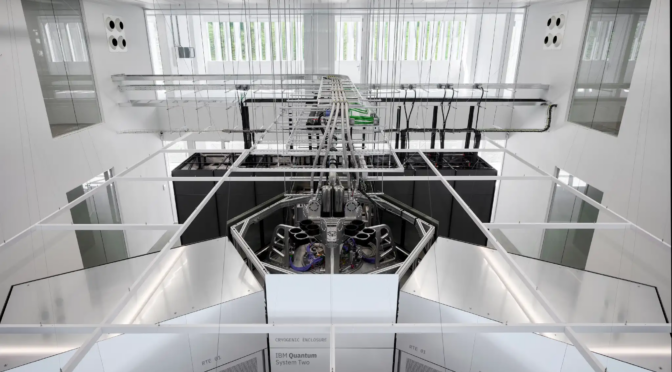
It is amazing how fast technology has changed over my lifetime. When my dad first came to the United States, he rarely called back home in the Basque Country. He’d call maybe at Christmas. It was just too expensive. However, at the end of his life, he was constantly on his cell phone talking to his brothers back in the Basque Country. What was once a prohibitively expensive and extremely inconvenient became almost trivial. The Basque Country is on the forefront of pushing forward one of the next frontiers of technology – quantum computing. They just got one of the newest quantum computers in the world, and are only the second place outside of IBM to have one.
- Quantum computing is an alternative approach to computing from the more traditional analog and digital computing.
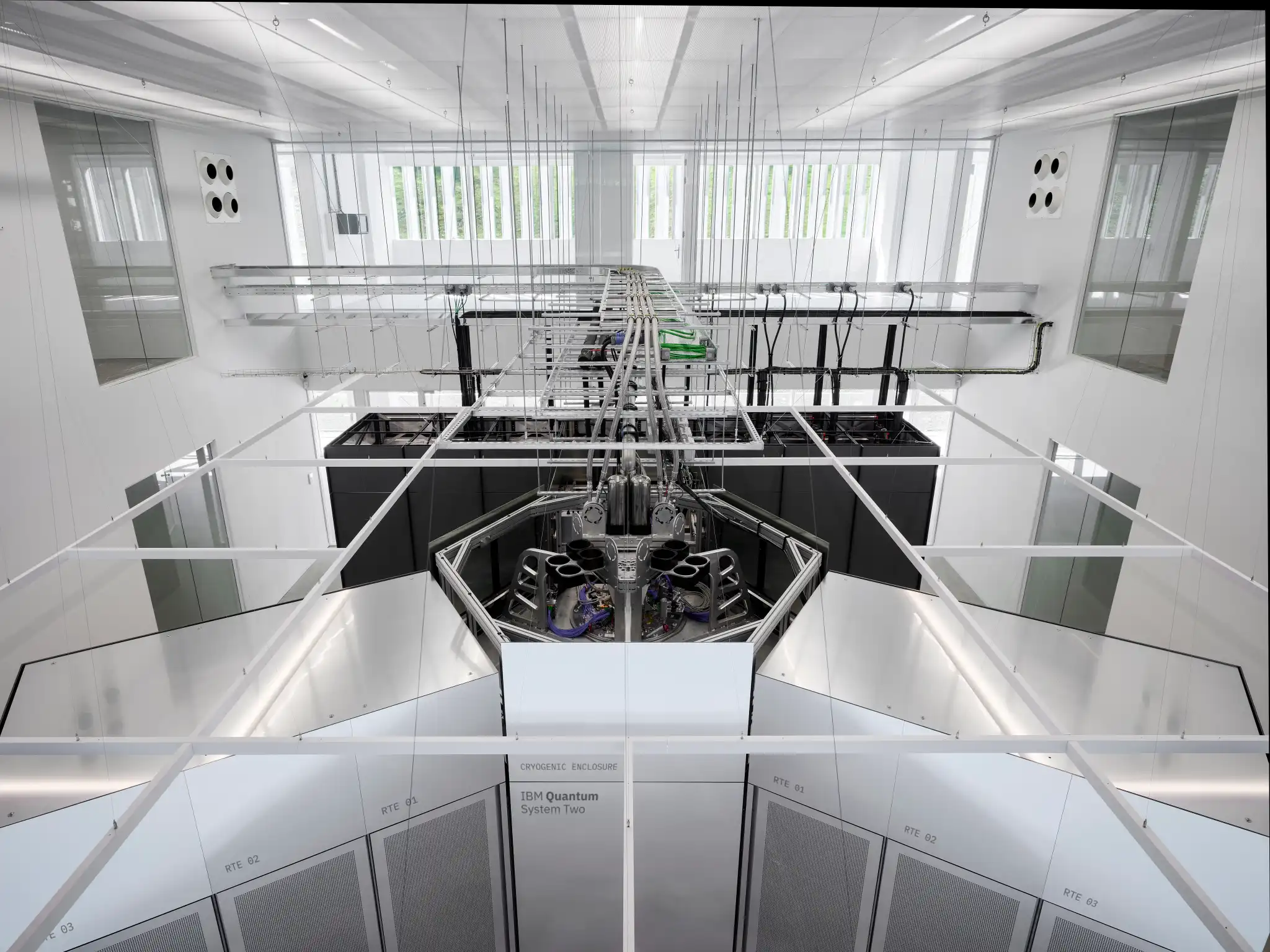
- In October of 2025, IBM delivered to the Basque Country the IBM Quantum System Two, the first of its kind in Europe. This machine is modular and scalable, and can be upgraded in the future as newer quantum processors are developed. It uses IBM’s Heron chips, which contain 156 qubits. The computer is housed in Ikerbasque’s new building in Donostia. To perform, the computer has to be cooled to 0.15 Kelvin, or -459 Fahrenheit.
- A key player the push to make the Basque Country a leader in this area is the Basque Quantum Initiative, or BasQ. This initiative is led by “the Department of Science, Universities and Innovation of the Basque Government and the three Provincial Councils of Araba, Bizkaia, and Gipuzkoa.” The Director of the initiative is Professor Javier Aizpuru, a research scientist at the Donostia International Physics Center (DIPC).
- These researchers have already been pushing the frontiers of quantum computing even before the delivery of this new system. For example, they used a quantum computer to simulate the motion of quarks, subatomic particles that make up protons and neutrons. They have also used such machines to look at “time crystals,” for the first time in two dimensions. Regular crystals, such as the NaCl crystals in table salt, have repeating patterns in space. Time crystals also repeat their structures in time, oscillating periodically.
A full list of all of Buber’s Basque Facts of the Week can be found in the Archive.
Primary sources: How the Basque Country became a leader in quantum computing by Rafi Letzter, IBM; BasQ; IBM unveils advanced quantum computer in Spain by Esther Macías, NetworkWorld